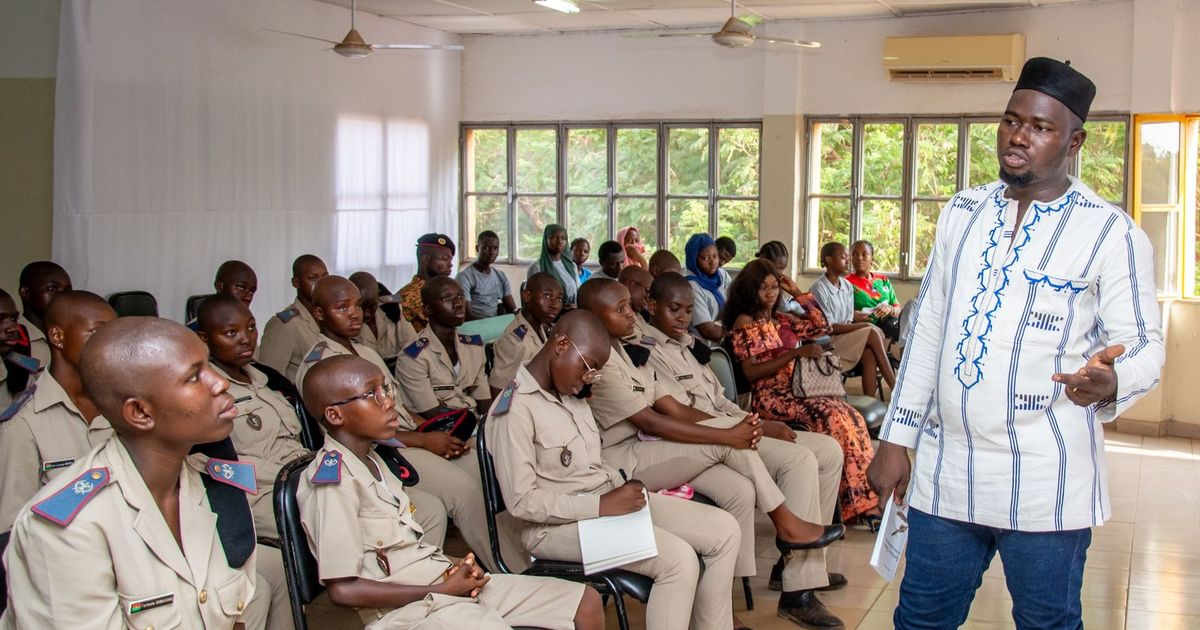
How do you manage a large class?
By replacing improvisation with routines: gestures repeated the same way, which save time and reduce noise. In a large class, the teacher cannot watch everything; routines are what hold the class together. They take a few weeks to set up and free up attention for teaching.
Here are seven routines that need no special equipment. None is magic: choose two or three, set them up properly, then add others.
Routine 1: entering the classroom
The first minutes set the tone. An effective entry:
- an instruction written on the board before students arrive ("Take out your notebook, copy the date, answer question 1");
- a short, independent task during the roll call;
- a fixed gesture to start: the teacher stands in the same spot and waits for calm.
Routine 2: the seating plan
- Assign seats, at least at the start of the year. A plan avoids arguments, speeds up the roll call and helps you learn names.
- Seat students who need help at the front, and separate those who distract each other.
- Change the plan at an announced rhythm (for example each term).
Routine 3: the attention signal
Shouting wears out the voice and the group. Choose a short signal, repeated the same way: raised hand, countdown ("3, 2, 1"), a fixed phrase. Explain it on the first day, practise it, then wait for complete silence before speaking.
Routine 4: instructions in three steps
- Say the instruction, once, in one sentence.
- Write the instruction on the board, with the time allowed.
- Have a student repeat it: "What do you have to do?"
This avoids repeating the same thing twenty times to twenty students.
Routine 5: whole-class checking
In a large class, you cannot question everyone one by one. Have everyone answer at the same time:
- Slate or sheet held up: everyone writes an answer and holds it up; at a glance, you see who has understood.
- Thumbs: thumb up, sideways or down to say "I'm sure, unsure, lost".
- Whisper to a neighbor: each student explains to their neighbor, then you question a few at random.
Routine 6: group work with roles
Groups of four, with a role for each: facilitator, secretary, reporter, timekeeper. Rotate the roles. A group of four has shared questions to ask you, rather than four separate ones.
- Give a precise deliverable (a written answer, a poster, an exercise).
- Move around, observe and only answer after the group has tried.
Routine 7: shared marking and the exit ticket
- Whole-class correction: correct one exercise on the board with the students, then let them correct their own copy with a pen of another color.
- Peer marking: two students swap copies with a marking scheme, then you check by sampling.
- Exit ticket: at the end of the lesson, each student writes on a scrap of paper one thing learned and one question. You scan the papers in two minutes to know what to go over again.
Handling the administrative load of a large class
A large part of a teacher's time goes on admin: roll call, marks, report cards. A few reflexes:
- A quick roll call: an assigned seat lets you spot the absent at a glance.
- Marks entered in batches: in ClassMata, you can enter marks student by student, chaining with the Enter key, or export an Excel workbook of the class, fill it in offline then import it. See Mark Entry.
- Printed mark sheet: the entry page lets you print a blank or filled sheet.
Mistakes to avoid
- Setting up all the routines on the first day.
- Changing the rule from one lesson to the next.
- Punishing the whole class: a large class loses the cooperation of the students who are working.
- Only checking the same students, the ones who raise their hands.
Frequently asked questions
How many students is "large"?
It depends on the context and the room. These routines do not depend on a precise number: they help whenever the teacher's individual attention is no longer enough.
How do you give individual feedback to everyone?
Alternate: mark in depth the copies of a third of the class for each assignment, and give the others collective feedback on the most frequent mistakes.
What about noise?
Set noise levels (silence, low voice, group discussion), announce the one expected for each activity and practise moving from one to another.
Last updated: . Lire cet article en français.